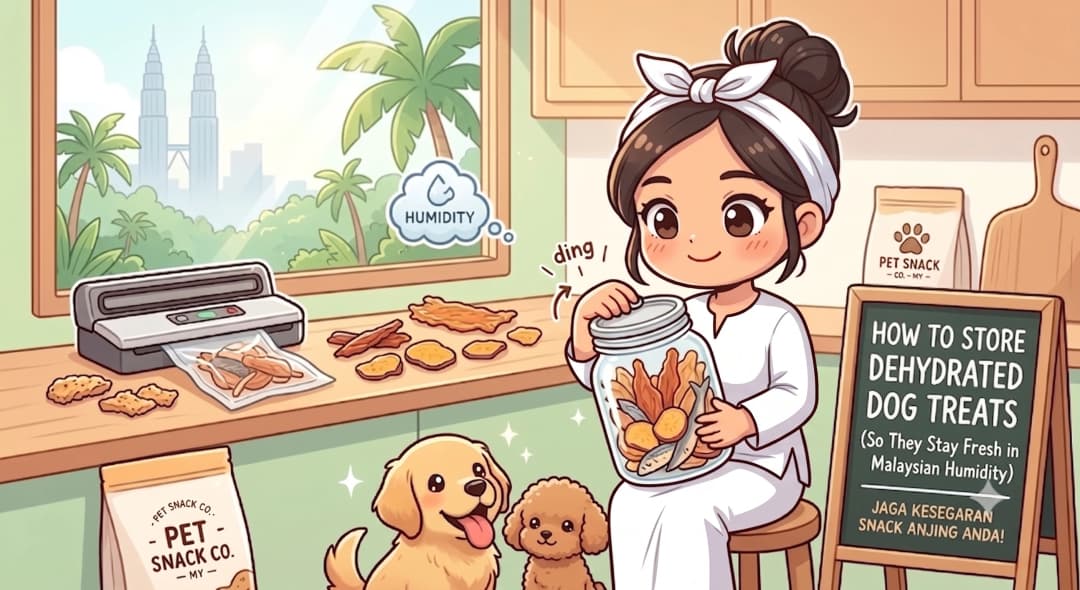
How to Store Dehydrated Dog Treats (So They Stay Fresh in Malaysian Humidity)
Malaysian weather is many things — friendly to dehydrated pet treats is not one of them. Between the humidity, the heat, and the occasional monsoon, an artisan treat that would last two months in a dry climate can go soft in three weeks here. This is exactly how we store ours, and what we tell every customer to do at home.
Why storage matters more than you think
Dehydrated treats are shelf-stable because their moisture content is below the threshold where bacteria, yeast, and mould can grow. Once you introduce Malaysian air — sitting at around 75–85% relative humidity most of the year — those treats start reabsorbing moisture. That is when the texture goes from snappy to bendy, and shortly after, you get spoilage. Thin, lean cuts like our chicken jerky soften fastest, while denser duck neck chews hold up a little longer — but both belong in an airtight jar here.
The 3-tier storage rule
Tier 1 — Unopened bag
Keep the sealed bag in a cool, dry cupboard away from direct sunlight. Do not store next to the stove or on top of the fridge (both radiate heat). Best-before date on the pack is your reference.
Tier 2 — Opened bag, room temperature
Transfer to an airtight glass jar or a food-safe silicone container. Not zip-lock — the seal is too weak for Malaysian humidity. Expect 2–3 weeks of freshness.
Tier 3 — Opened bag, refrigerated
Same airtight container, but in the fridge. Extends freshness to up to 3 months. Let the treat come to room temperature before feeding — cold treats can bother sensitive stomachs.
Freezing: the underrated MVP
If you buy in bulk (say, our Budget Box), portion into small freezer bags and freeze what you will not use in the next 3 weeks. Frozen dehydrated treats keep their texture and nutrition for 6 months or longer. Thaw one portion at a time — 15 minutes on the counter is enough.
Signs your treats have gone off
- Bendy instead of snappy. The most reliable early warning — especially for crunchy items like our veggie chips.
- Any visible fuzz or specks. Even a pinhead of mould means the whole batch goes.
- Oily film on the surface. Fats have started to oxidise. Safe-ish but no longer nutritious.
- Sour or off smell. Fresh dehydrated meat has a mild, roasted scent — never sharp or fermented.
Small habits that quietly extend shelf life
- Use a clean, dry spoon or tongs — never damp hands — when serving.
- Close the container immediately after serving. Ten minutes on the counter matters.
- Buy smaller bags more frequently rather than one giant bag every quarter.
- Toss a food-safe silica gel packet in the jar if you leave for a long trip.
A quick reminder about preservative-free treats
The reason our treats need this level of care is the same reason they are safe: no preservatives. Commercial treats last 12 months on a shelf because they are stabilised with BHA, BHT, or propylene glycol. Ours do not, so we ask you to meet us halfway on storage. If you want more on what “clean label” actually means, read our safety guide.